
K-12 Education Guides
With a special focus on grades K-12, education guides inspired by Craft in America episodes take a wide look at the history, cultural traditions, and impact of craft in the United States, from Indigenous origins through present day, and include hands-on craft activities. Available at craftinamerica.org/guides and through PBS LearningMedia.
These lessons are designed to meet National Visual Arts Standards—part of the National Core Arts Standards (NCAS)—encouraging the use of critical thinking skills and creative engagement. Teachers can use these guides to lead thoughtful discussions on art and culture, assign creative and responsive writing prompts, or engage students in meaningful and fun hands-on projects.
For K-12 students, these guides help build connections to different content areas across the board, from environmental sciences to history and social studies. They can be easily woven into existing lessons or stand alone as a unit all on their own, whatever works best for each individual classroom, and for student audiences with diverse needs.
Visit craftinamerica.org/guide to download these free lesson plans that educate, involve, and inform students about how craft plays a role in their lives!


Education Guides for Handwork 2026
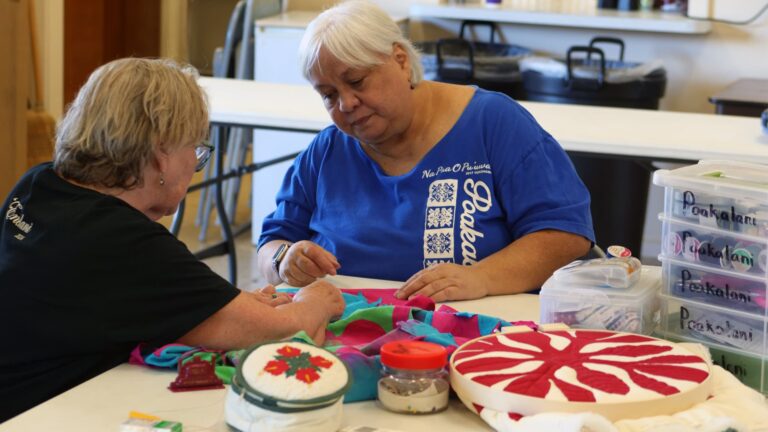
HAWAIIAN QUILTS: SPEAKING WITH FABRIC & THREAD
with Poakalani quilter Cissy Serrao from Craft in America’s WEST episode
CORE FOCUS:
Cultural preservation and nature-inspired radial design
KEY TECHNIQUES:
Paper folding/cutting, appliqué, basic stitching
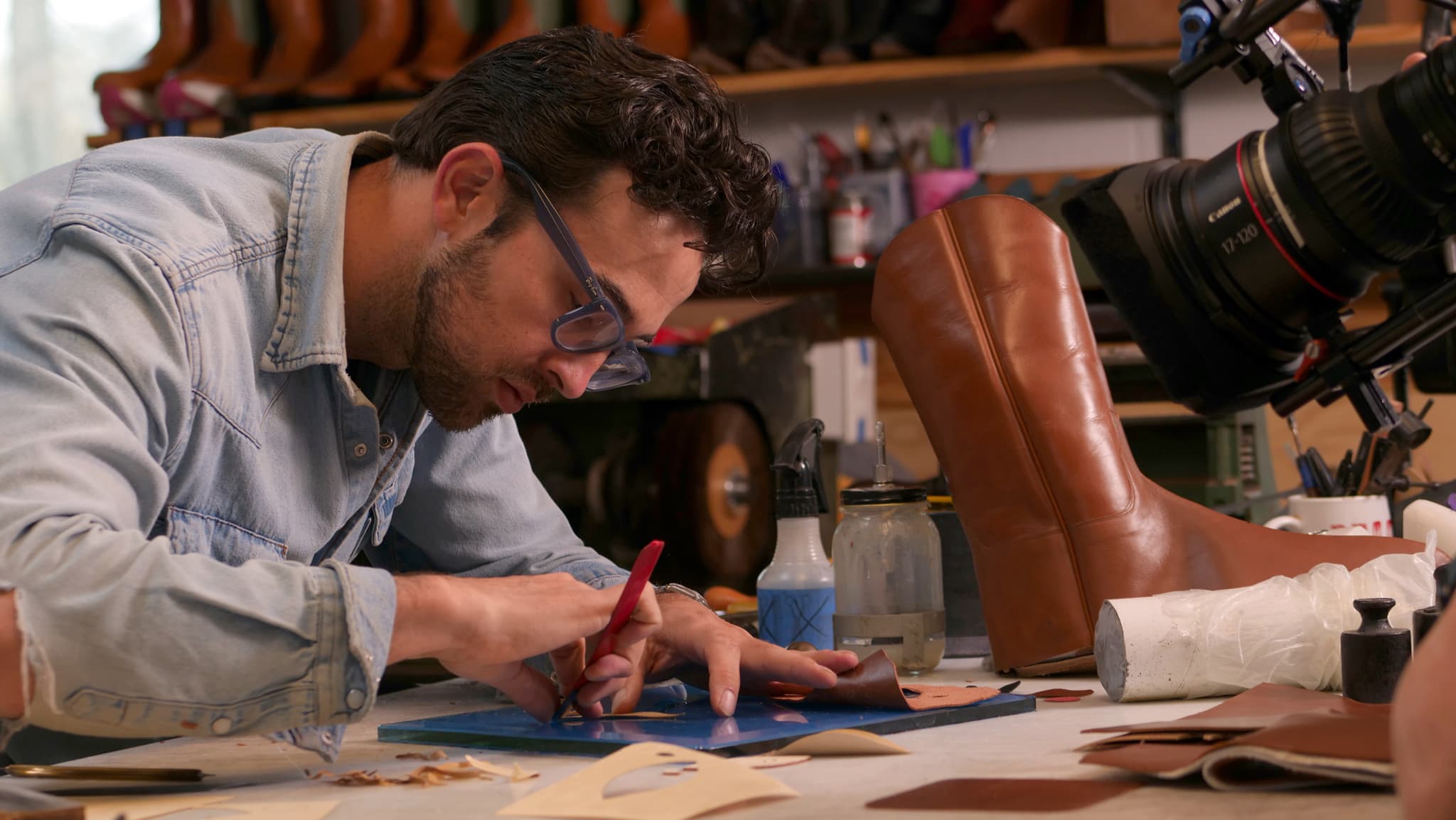
WEARABLES MADE FOR STORYTELLING
with bootmaker Graham Ebner from Craft in America’s WEST episode
CORE FOCUS
Collaborative design and personal storytelling through fashion.
KEY TECHNIQUES
Embroidery, leatherwork concepts, upcycling textiles
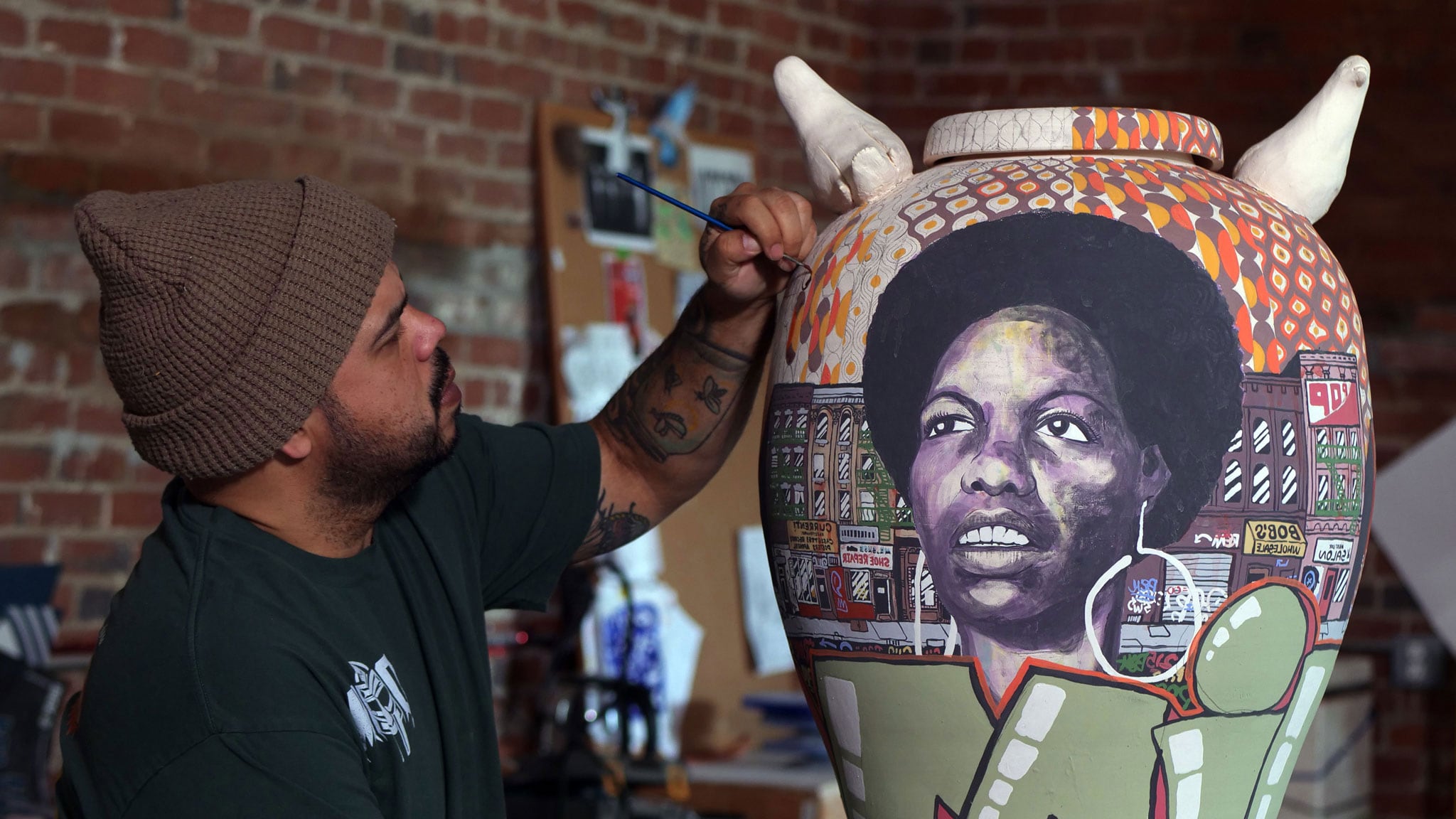
REPRESENTING COMMUNITY
with potter Roberto Lugo from Craft in America’s EAST episode
CORE FOCUS
Juxtaposition of classical forms with urban graffiti and identity
KEY TECHNIQUES
Ceramic concepts, pattern design, community murals
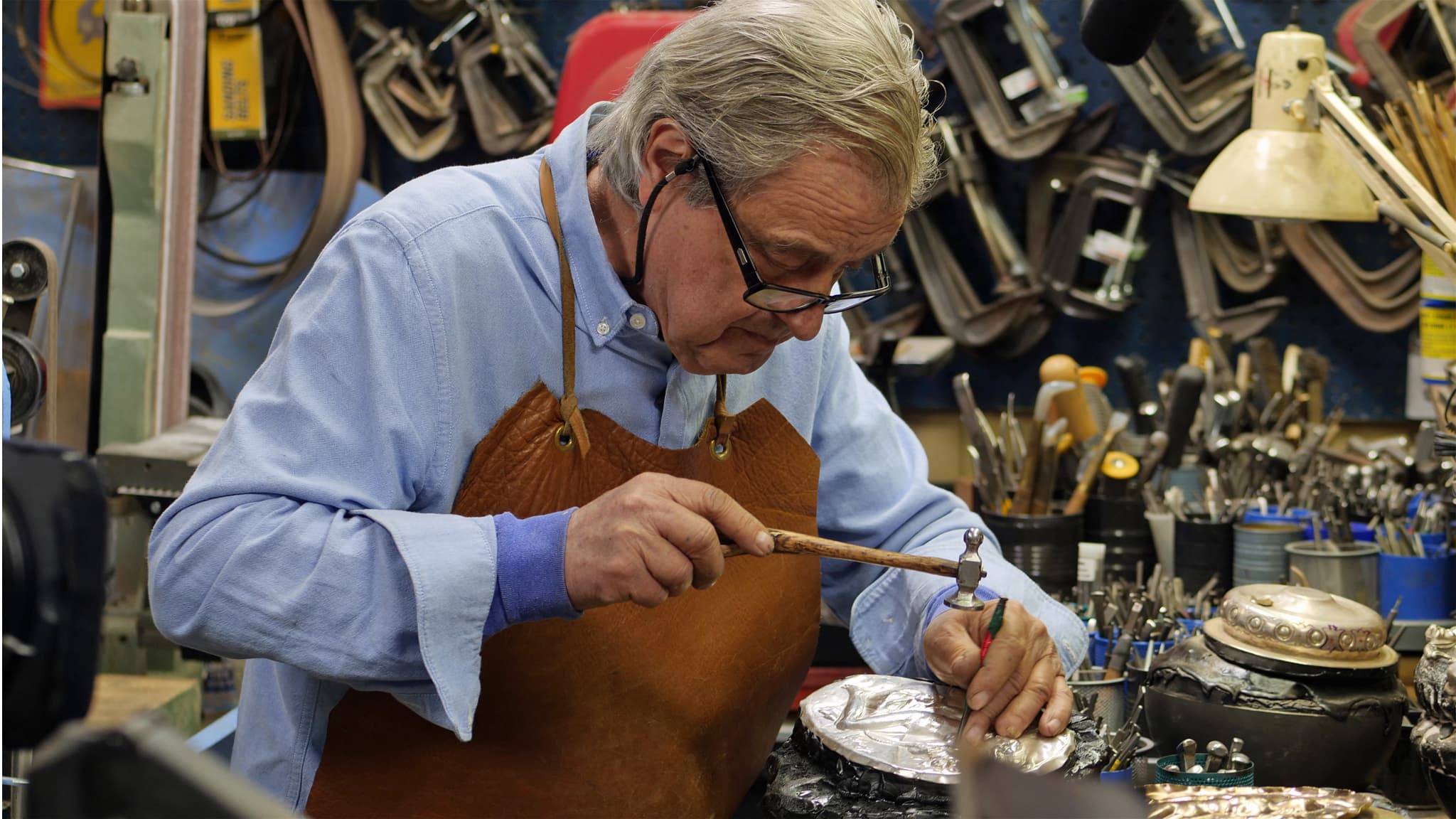
UBALDO VITALI AND PAUL REVERE: SILVERSMITHS CONNECTING ACROSS TIME
with silversmith Ubaldo Vitali from Craft in America’s EAST episode
CORE FOCUS
Connecting contemporary silversmithing to American history
KEY TECHNIQUES
Repoussé method, historical conservation, metalwork
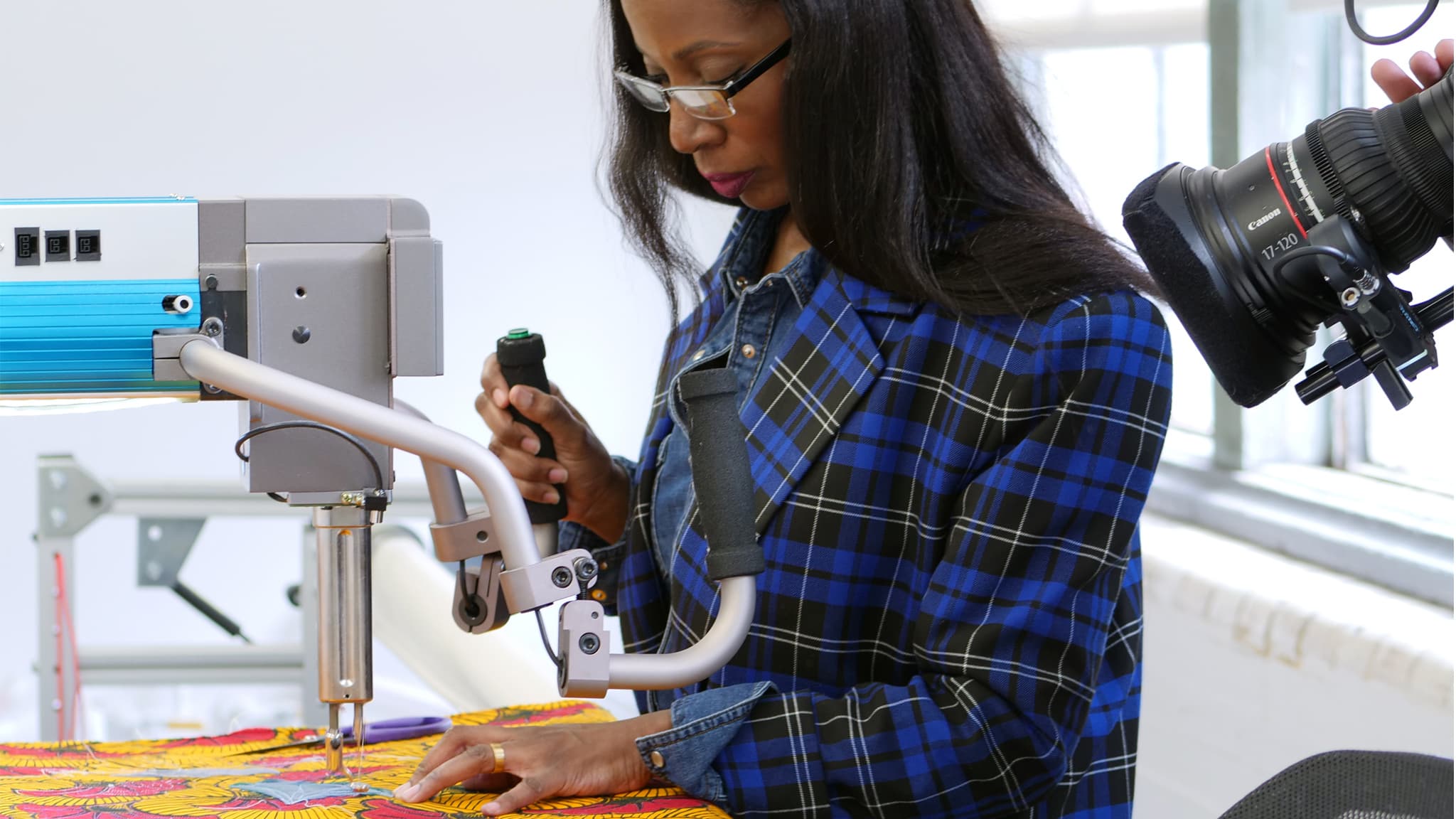
THROUGH THE EYE: PERSONAL CONNECTIONS WITH NEEDLE AND LENS
with quilt artist Bisa Butler from Craft in America’s EAST episode
CORE FOCUS
Meaning in photographs and expressive use of color and pattern
KEY TECHNIQUES
Paper manipulation and embellishment, embroidery
Why Use These Guides
Whether students are cutting paper “snowflakes” inspired by Hawaiian flora or designing upcycled patches that tell a family story, they are learning to communicate information about the world around them—and thus the impact of storytelling—through the power of handmade objects.
Using episodes of the Craft in America series on PBS as an entrypoint, these lessons are designed to meet National Standards for Visual Arts education, encouraging the use of critical thinking skills and creative engagement.
Teachers can use these guides to lead thoughtful discussions on art and culture, assign creative and responsive writing prompts, or engage students in meaningful and fun hands-on projects.
For K–12 students, these guides help build connections to different content areas across the board, from environmental sciences to history and social studies.
They can be easily woven into existing lessons or stand alone as a unit all on their own—whatever works best for each individual classroom and for student audiences with diverse needs.
Empowering Creativity and Preserving Culture
This collection of educational guides for Handwork 2026 provides middle and high school teachers (Grades 8–12) with interdisciplinary, hands-on lessons that bridge the gap between traditional craft and contemporary art.
Each guide is designed to foster critical thinking, cultural empathy, and artistic technical skills.
Themes & Learning Objectives
Across all guides, students are encouraged to explore three main pillars:
- Identity & Heritage
Understanding how personal history and neighborhood environments shape an artist’s mission. - Collaboration & Cross-Pollination
Learning how working with clients or other artists leads to a unique layering of ideas. - Traditional vs. Contemporary
Seeing how ancient techniques (like Greek pottery or 18th-century silversmithing) are adapted for 21st-century audiences.
Materials & Resources Provided
Each guide is a comprehensive toolkit for the classroom, including:
- Video Segments
Curated clips from Craft in America episodes. - Student Worksheets
Guided activities such as “Carrying On Culture” and “Collaborative Design Planning.” - Technical Demonstrations
Step-by-step instructions for creating grids, five-pointed stars, and sewing stitches. - National Standards
Alignment with National Standards for Visual Arts Education: Creating, Presenting, Responding, and Connecting.
University-Level Artist Residencies
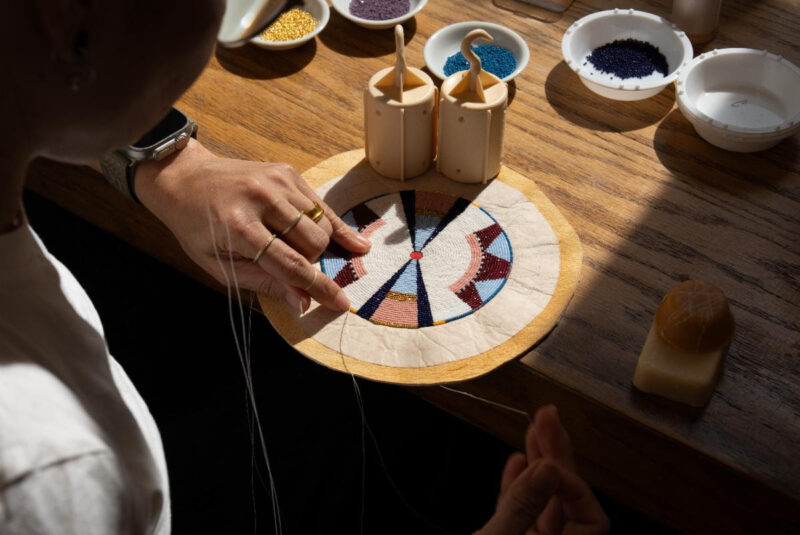
Thanks to a generous grant from the Windgate Foundation, artist residencies at ten universities will pair master craftspeople, both local and national, with top educational institutions to teach specialized techniques, promote cultural dialogue, and explore American craft traditions.
Artists introduce students to techniques not commonly emphasized in higher arts education, while students share expertise in contemporary materials, technology, and emerging practices. Participating universities and artists include:
The New School, Parsons MFA Textiles Program
New York, NY
Artist: Jamie Okuma (Luiseno, Shoshone-Bannock, Wailaki, and Okinawan who is also an enrolled member of the La Jolla band of Indians in Southern California)
Focus: Fiber and textile design
In residence: March 23–27, 2026
University of Arkansas, School of Art
Fayetteville, AR
Artist: Carla Edwards
Focus: Ceramics
Visiting Artist Lecture: February 18–21, 2026
In residence: June 1–24, 2026
Evergreen State College, Longhouse Native Arts Campus
Olympia, WA
Artist: Shaa dootla Iyall (Ravenstail and Chilkat)
Focus: Weaving, basketry, and education specializing in Ravenstail and Chilkat traditions
In residence: July 26–31, 2026
Mississippi State University (MSU)
Starkville, MS
Artist: Coulter Fussell
Focus: Quilting, upholstery, photography, sculpture, and mixed media Exhibition at MSU’s Cullis Wade Depot Art Gallery: August 15–September 11, 2026
In residence: September 7–11, 2026
Clark Atlanta University / Morehouse College / Spelman College
Atlanta, GA
Artist: Alberta Whittle
Focus: Multidisciplinary working across film, sculpture, printmaking, installation, and performance.
In residence: September 17-25, 2026
University of Wisconsin–Madison
Madison, WI
Artist: Wendy Maruyama
Focus: Wood
In residence: Week of September 21–25, 2026
Institute of American Indian Arts (IAIA)
Santa Fe, NM
Artist: Sunshine Guzman (Shoshone-Bannock)
Focus: Traditional regalia for dance and ceremony
In residence: October 5–9, 2026
Massachusetts Institute of Technology (MIT)
Cambridge, MA
Artist: Jeff Parke
Focus: Glass and metalwork
In residence: October 5-9, 2026
University of Iowa
Iowa City, IA
Artists: Naomi Dalglish and Michael Hunt of Bandana Pottery
Focus: Korean folk traditions and Onggi techniques incorporated with local materials
In residence: November 2–6, 2026
Artist: Cannupa Hanska Luger (Mandan, Hidatsa, Arikara, and Lakota)
Focus: Mixed media working across sculpture, installation, public art, performance, video, and film/theater
In residence: November 2–6, 2026
Craft@Home
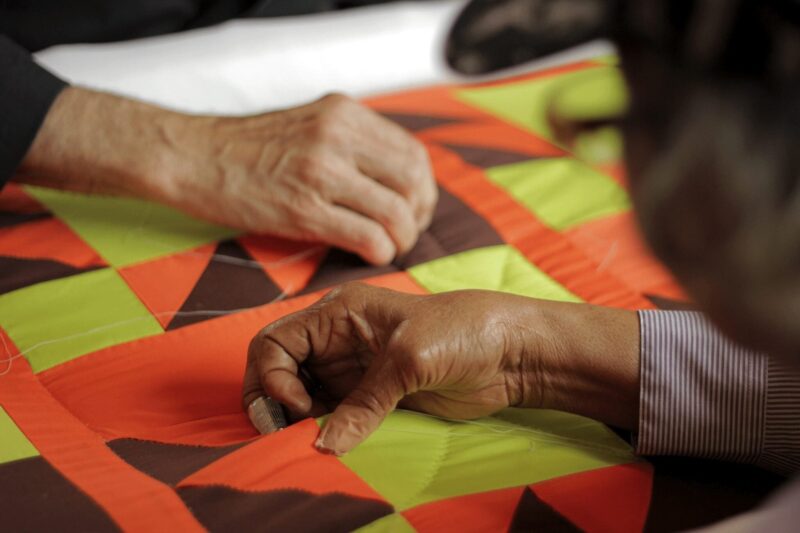
Created for all lovers of craft—those who want to learn about and be inspired by craft artists, those who seek to know more about the role of craft in our lives, and those who want to give one or more craft processes a try on their own, Craft@Home provides short excursions into the world of the handmade. Applicable in a range of settings—community centers, schools, senior facilities, park programs, and individual homes and studios, the materials provide entry points for discovering ways to bring the hand-crafted into your life.
Choose a medium—clay, fiber, paper, wood, metal, or glass—and explore the packets to find your pathway into Craft@Home.
Clay
Get Inspired
Learn about Clay Artists
Paper
Get Inspired
Learn about Paper Artists